
What makes racking earn its space
Stock-led layout
Bay size and aisle planning reflect the goods you store and how they move.
Safer daily handling
Clear routes and protective components support cleaner forklift movement.
Better use of footprint
The racking works with the floor space available instead of fighting it.
Racking should suit the stock and the workflow
Racking works best when it matches the stock, the handling method and the pace of the warehouse, not when it is forced into spare corners.
We install warehouse racking around pallet size, stock type, access frequency and the equipment used to move goods. That could mean layouts for palletised products, long items, bulk storage or smaller picked stock, each with different demands on bay size and aisle planning.
With Rhino Mezzanine Floors, the aim is clear access and dependable storage rather than rows of frames that look tidy but slow the warehouse down.
The details decide how well it performs
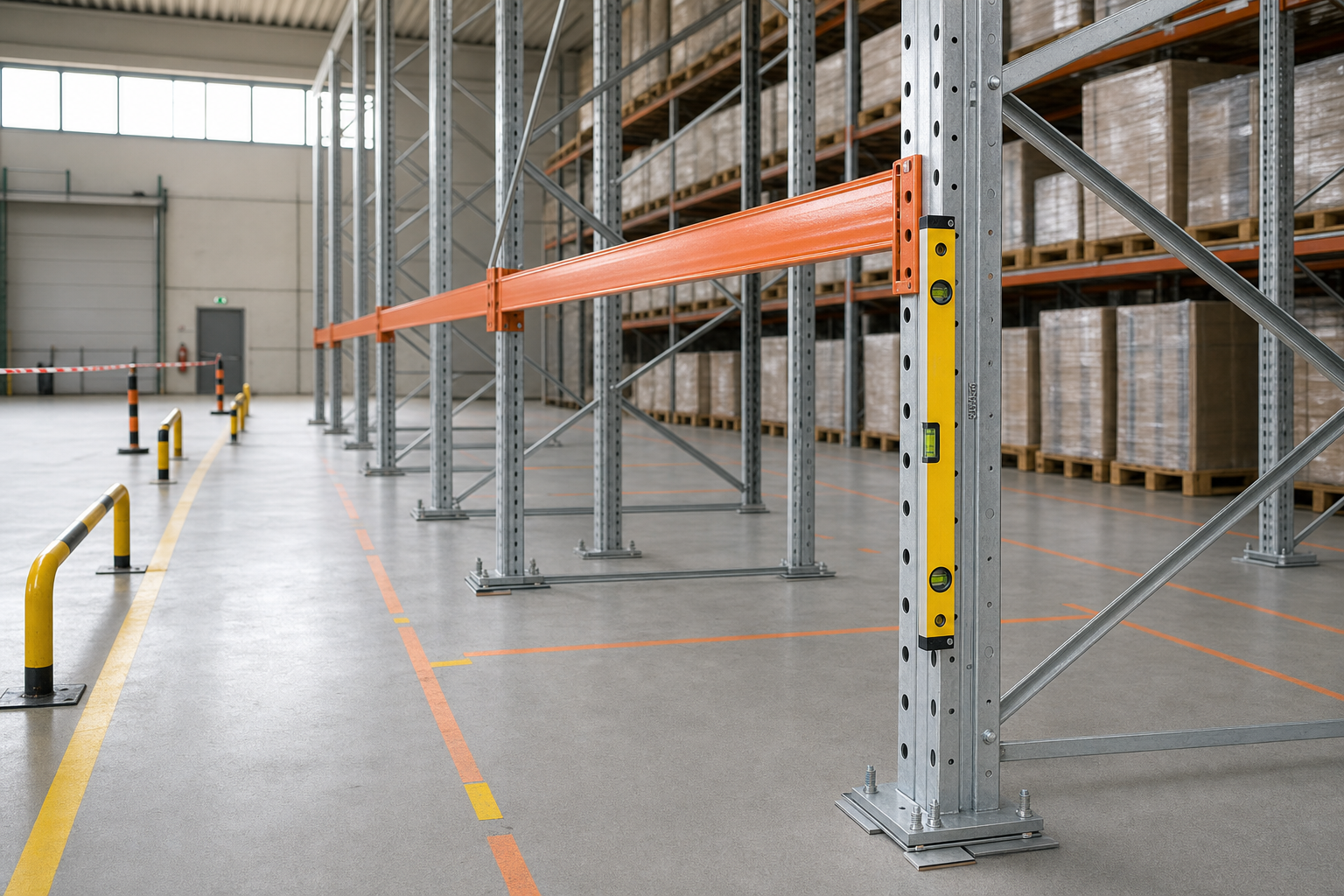
The installation itself needs care as well as planning. Frame positions, levelling, anchoring, beam placement and protective components all affect how the system performs in daily use. We also look at aisle widths, loading positions and how the racking sits alongside floor space or any mezzanine structure already in the building.
Load information, signage and post-installation checks are part of getting the job properly set up. Through Rhino Mezzanine Floors, racking is installed as a working system, not just assembled as a product.
Frequently asked questions
What information do you need before installing racking?
We need to understand the stock type, pallet dimensions, handling method, access frequency and the equipment used on site. Those details shape the layout, bay size and aisles. Without that information, it is too easy to install a system that looks right but works badly.
Can racking be installed around existing stock and forklifts?
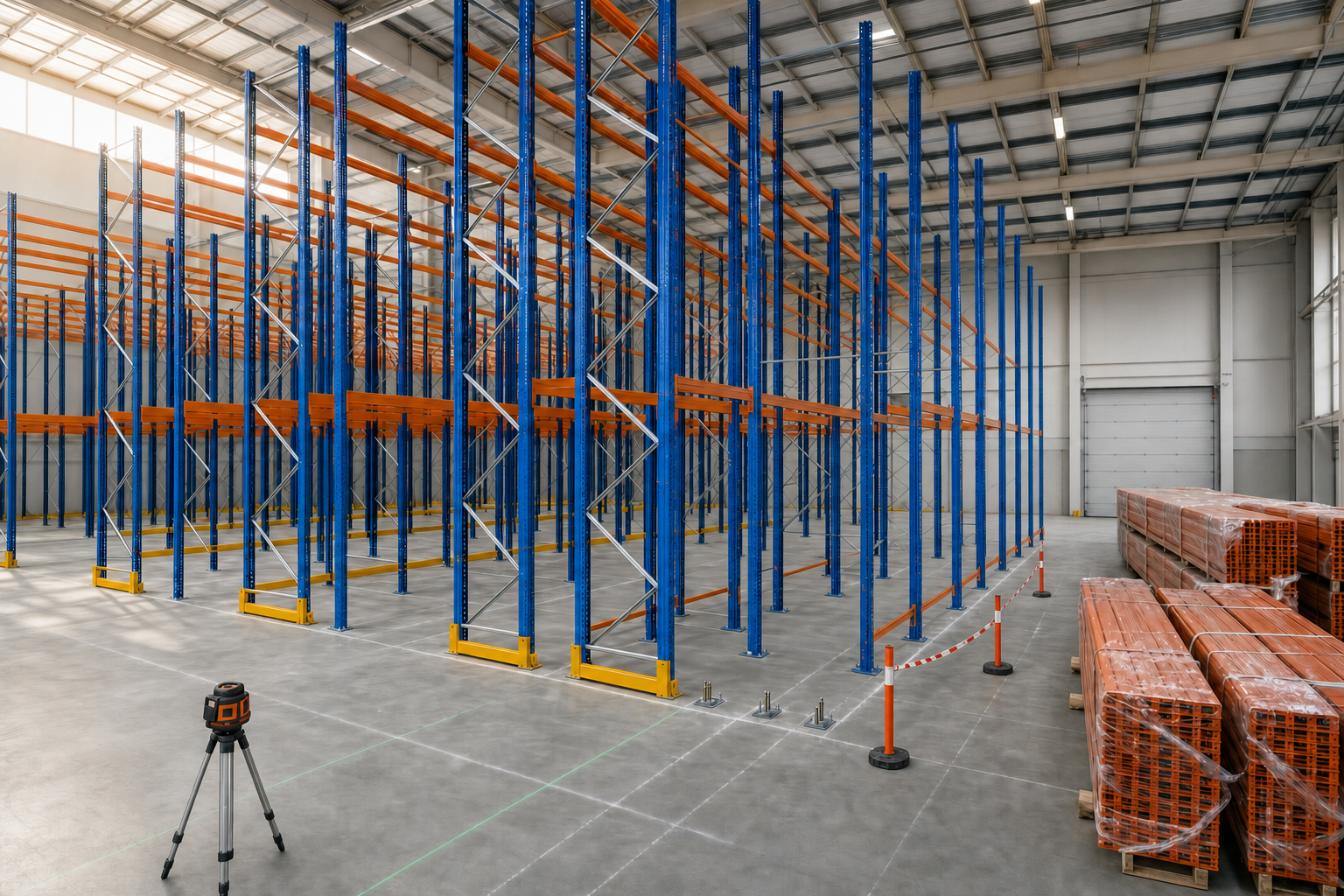
It often can, but the site needs clear working zones and safe movement routes. We plan around deliveries, current stock positions and forklift activity so the installation area is controlled properly. The busier the warehouse, the more important that preparation becomes.
What happens after the racking is fitted?
The job is not finished the moment the frames are standing. Load information, signage and post-installation checks matter because they help the system be used correctly from day one. That final stage is what turns a completed install into a dependable storage setup.